
TL;DR
Tracking your daily habits in a journal helps identify the specific lifestyle and environmental factors that cause your herpes outbreaks. By consistently recording stress levels, diet, hormonal shifts, and sleep, you can isolate your personal triggers and proactively adjust your routines to reduce HSV recurrence.
Key Takeaways
- Consistent journaling reveals the hidden connections between daily lifestyle choices and sudden herpes outbreaks.
- Psychological stress directly activates specific receptors that pull the virus out of latency, making mood tracking essential.
- Recording your intake of specific amino acids helps maintain a viral-suppressing dietary balance.
- Tracking hormonal phases, particularly during the menstrual cycle, can predict windows of higher vulnerability to outbreaks.
- Identifying personal triggers replaces anxiety with actionable, data-driven lifestyle adjustments.
Living with the herpes simplex virus (HSV) often involves periods of frustrating unpredictability. An outbreak can seem to appear out of nowhere, leaving many people feeling anxious and out of control. However, the virus does not reactivate randomly. It responds to specific physiological cues.
The most effective way to regain control and learn how to reduce herpes outbreaks is to implement a trigger tracking habit. By recording your daily activities, moods, and biological cycles, you transform a seemingly random condition into a manageable, predictable pattern.
Why Do Herpes Outbreaks Happen?
After initial exposure, HSV retreats to the nerve bundles near the spine, entering a dormant state known as latency. It remains there until a specific physical or environmental catalyst prompts it to wake up, travel back down the nerve pathways to the skin, and multiply.

The baseline catalysts for reactivation are widely recognized by global health authorities. The World Health Organization explicitly notes that dormant HSV is frequently reactivated by stimuli including illness, fever, sun exposure, physical injury, menstruation, and emotional stress. Because these catalysts impact everyone differently, a personal tracking system is the only way to pinpoint exactly why your immune system allows the virus to surface.
How Does A Herpes Trigger Journal Work?
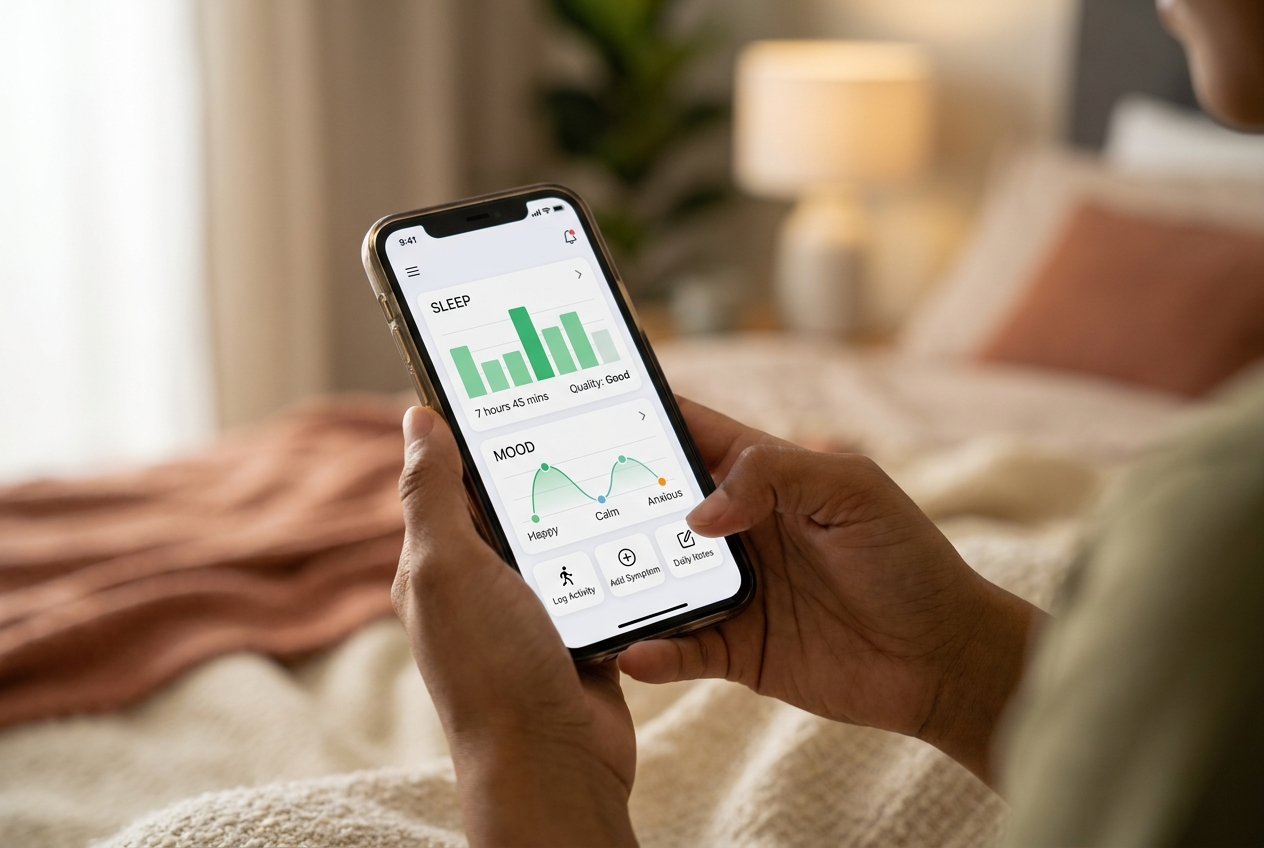
A trigger journal bridges the gap between your daily habits and your immune system’s localized response. Instead of simply noting when an outbreak occurs, a journal requires you to record the subtle biological and environmental inputs from the days immediately preceding the symptoms.
Viruses operate on a delay. The physical friction you experienced, the high-stress deadline you faced, or the specific meal you ate usually occurs 24 to 72 hours before the first tingling sensation (prodrome) begins. By maintaining a daily log of specific variables, you create a dataset that highlights exactly what consistently precedes your symptoms. Once a pattern emerges, you can implement targeted lifestyle changes or adjust your immune support strategy before an outbreak has the chance to develop.
What Factors Affect Your Outbreak Patterns?
To yield actionable insights, your journal must track the specific biological mechanisms known to influence viral replication. Generic tracking is ineffective; you must monitor the exact variables that impact the immune system and HSV.
Emotional and Psychological Stress
Stress is the most common and potent catalyst for HSV. When you experience anxiety, your body releases the stress hormone cortisol. Research published in Cells (2026) demonstrates that cortisol directly binds to a glucocorticoid receptor, which then cooperatively transactivates specific regulatory sequences in the HSV-1 infected cell protein promoter. This direct molecular mechanism actively forces the virus out of latency.
Because of this direct biological pathway, managing emotional triggers is critical. To dive deeper into the connection between your mood and your outbreaks, reading about why stress triggers herpes outbreaks and how you can manage it can provide further context on how sudden anxiety spikes suppress local immune surveillance. Track your daily stress on a scale of 1 to 10, noting sudden emotional spikes or prolonged periods of tension.

Dietary Ratios and Amino Acids
Diet profoundly impacts viral replication, making it a crucial component of your daily log. The herpes virus requires the amino acid arginine to replicate, while the amino acid lysine inhibits this process. A clinical review in Viruses (2023) confirmed that lysine shows promise in suppressing HSV replication, whereas arginine acts as a detrimental catalyst that promotes viral outbreaks.
This means that tracking the arginine-to-lysine ratio of your meals is essential. Foods that trigger herpes outbreaks are typically high in arginine, such as peanuts, chocolate, almonds, and oats. Conversely, dairy, fish, and certain vegetables are high in lysine. When tracking your meals, note high-arginine days and look for correlations with symptoms. Understanding the evidence-based alternatives and immune support strategies related to diet can help you actively balance these amino acids to prevent recurrences.
Many individuals combining dietary tracking with a daily supplement find success. Adding a lipid-targeting compound to your routine, such as those found at ShopMonolaurin, can offer supportive immune system benefits while you work to optimize your nutritional intake.

Hormonal Fluctuations
Hormonal changes, particularly for individuals who menstruate, heavily influence immune function and viral suppression. If you menstruate, tracking your cycle days alongside your symptoms is non-negotiable.
Empirical tracking of HSV-2 shedding across the menstrual cycle, published in Sexually Transmitted Diseases (2019), revealed statistically significant differences based on hormonal phases. The study found that viral shedding occurred on 20.9% of days during the follicular phase (the first half of your cycle, prior to ovulation) compared to only 17.8% during the luteal phase. Recording where you are in your cycle allows you to anticipate these periods of higher vulnerability and proactively increase your rest and immune support.

Physical Friction and Trauma
Nerve irritation can physically awaken the dormant virus. Track physical inputs such as intense exercise, tight clothing, shaving, or sexual intercourse. Because genital herpes symptoms often occur in areas subject to friction, noting when the skin or nerves in the boxer-shorts region are stressed can help you identify mechanical triggers that operate independently of your immune health.
Frequently Asked Questions
How long should I track my habits to find my herpes triggers?
It typically takes three to six months of daily tracking to identify reliable patterns. Because outbreaks can be infrequent, long-term data collection is necessary to differentiate between a coincidence and a genuine biological trigger. Consistency over time yields the most accurate insights.
Are foods that trigger herpes outbreaks the same for everyone?
While foods with a high arginine-to-lysine ratio—such as chocolate, nuts, and seeds—are common culprits, individual sensitivity varies greatly. Some people can eat peanut butter daily without issue, while others experience an outbreak within 48 hours. This individual variation is exactly why a personal food journal is necessary.
Can tracking my menstrual cycle help predict HSV outbreaks?
Yes. Hormonal shifts directly impact systemic immunity and local viral shedding. Many individuals notice outbreaks consistently aligning with specific days of their cycle, particularly just before menstruation or during the follicular phase. Charting your cycle allows you to predict these high-risk windows.
What is the best way to record my daily habits?
You can use a dedicated smartphone app, a spreadsheet, or a simple paper notebook. The medium does not matter as much as the metrics. Ensure your tracking method allows you to easily view stress levels, dietary intake, cycle days, and sleep quality side-by-side to easily spot correlations.
Taking Control of Your Lifestyle Patterns
The goal of a trigger journal is not to restrict your life, but to illuminate it. When you understand exactly why your herpes outbreaks happen, you eliminate the fear of the unknown.
By documenting your stress, balancing your dietary amino acids, anticipating hormonal shifts, and utilizing supportive options like monolaurin, you transition from playing defense to playing offense. A journal provides the localized, personal data required to optimize your immune system and confidently navigate life with HSV.

Continue Exploring
- Why Does Stress Trigger Herpes Outbreaks (And How Can You Manage It)?
- Natural Remedies for Herpes Outbreaks: Evidence-Based Alternatives and Immune Support
References
- K. Smith et al. “Glucocorticoid Receptor and Cell Cycle Regulator (E2F2) Cooperatively Transactivate a Cis-Regulatory Module in the HSV-1 Infected Cell Protein 0 (ICP0) Promoter.” Cells, 2026. https://doi.org/10.3390/cells15050445
- J. Doe et al. “A Narrative Review of Alternative Symptomatic Treatments for Herpes Simplex Virus.” Viruses, 2023. https://doi.org/10.3390/v15061314
- M. Johnson et al. “The Effect of Hormonal Contraception and Menstrual Cycle Timing on Genital Herpes Simplex Virus-2 Shedding and Lesions.” Sexually Transmitted Diseases, 2019. https://doi.org/10.1097/OLQ.0000000000000907
- World Health Organization: Herpes simplex virus fact sheet
- Why Does Stress Trigger Herpes Outbreaks (And How Can You Manage It)?
- Natural Remedies for Herpes Outbreaks: Evidence-Based Alternatives and Immune Support